

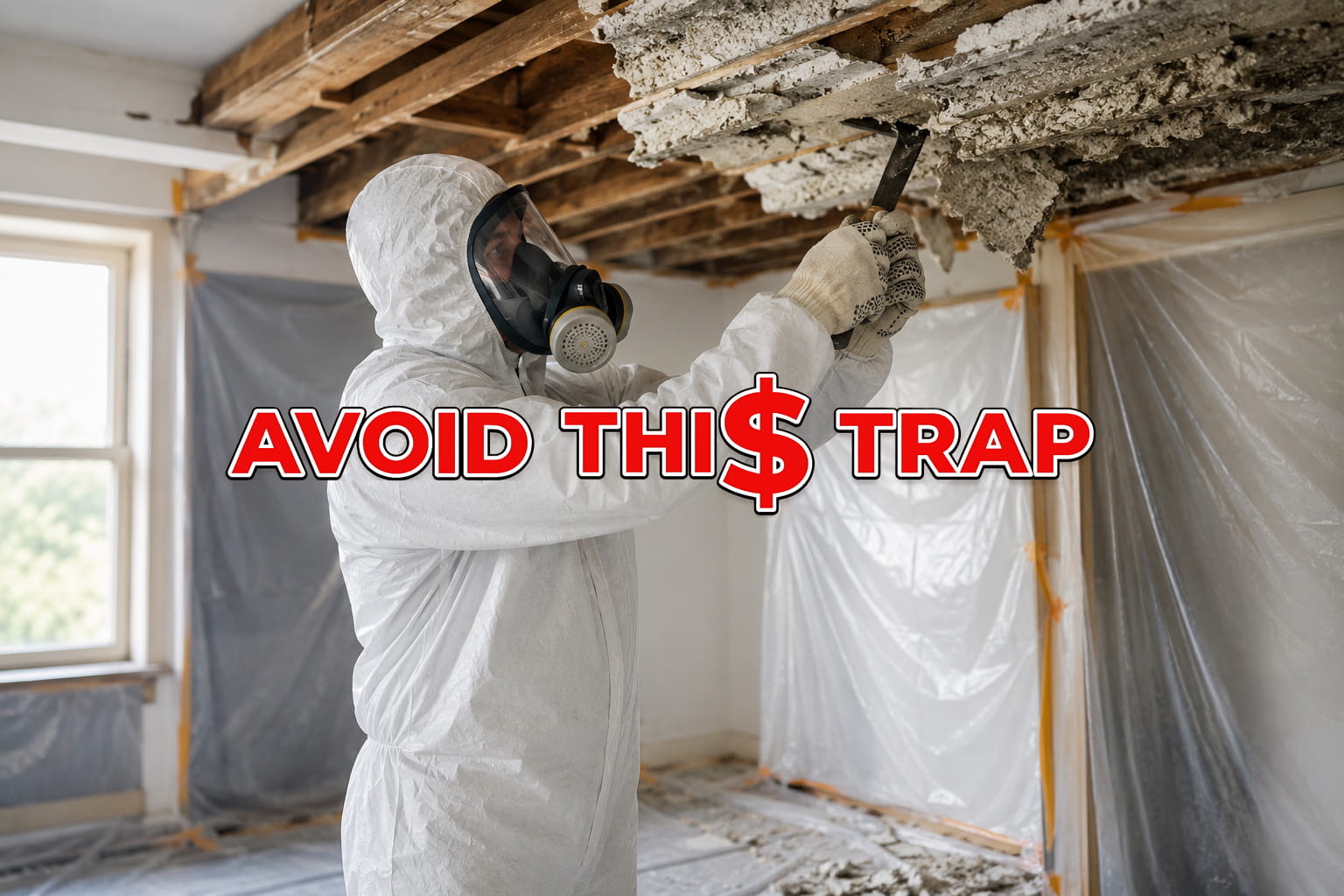
Asbestos is the single most common budget surprise in Hamilton renovations. Not because it’s rare – quite the opposite. Homes built or significantly renovated before the late 1980s and early 90s are very likely to contain it somewhere. The issue isn’t the asbestos itself. When it’s undisturbed and in good condition, it often poses no immediate risk. The issue is what happens when your builder opens up a wall and finds it.
If you’re planning a renovation on a pre-1990 home, read this first.
Where Is Asbestos Found in Homes?
Asbestos was widely used in New Zealand construction from the 1940s through to the late 1980s. It was popular because it’s fire-resistant, durable, and a decent insulator. The problem is that when disturbed – cut, drilled, sanded, or demolished – it releases fibres that are dangerous to breathe.
Common locations in older Hamilton homes include:
- Exterior cladding (fibrous cement sheets, often called “super six” or compressed sheeting)
- Bathroom and wet area linings (wall sheeting and flooring vinyl)
- Ceiling tiles and textured ceilings (particularly stipple or “popcorn” finishes)
- Soffit linings under eaves
- Roofing panels and gutters
- Insulation around hot water systems and pipes
- Floor coverings and the adhesive beneath them
- Internal wall linings in some homes
WorkSafe NZ has a detailed diagram showing the most common locations – if your home is pre-1990, it’s worth looking at before you do anything that involves cutting or removing materials.
The Rule of Thumb: Assume It’s There
If your Hamilton home was built before 1990, assume asbestos is present until you have testing results that say otherwise.
This isn’t being overly cautious. It’s how experienced renovation builders approach every pre-1990 job. The cost of testing is minimal compared to the cost of finding asbestos mid-demolition without a plan.
What you have to be aware of is that some asbestos products were still being used post-1990 in the way of old stock that builders may have on hand that would still be put to use on renovation and alteration projects.
What the Costs Actually Look Like
This is where people get caught out. The costs aren’t just in the removal – they start earlier than most people expect.
Testing: For a targeted sample test (checking specific areas you plan to disturb, like bathroom vinyl or a section of cladding), costs are relatively modest. A full independent asbestos survey of a larger renovation project can run from $1,500 to $2,500. That’s a lot cheaper than the alternative.
The 10 square metre rule: This is the one that catches homeowners off guard. By law, standard building teams are limited to removing 10 square metres of asbestos-containing material. Anything over that threshold requires a licensed specialist asbestos removalist – and their rates reflect the specialist nature of the work.
Full removal costs: If your exterior cladding is confirmed asbestos and needs to come off for your extension or renovation, you’re looking at specialist removal, hazardous waste disposal, and potentially significant project delays waiting for the right team. Costs vary widely, but it can take a serious chunk out of your budget if it wasn’t planned for.
The Smart Way to Handle It
The key is getting ahead of it rather than reacting to it. Here’s the approach I recommend to every homeowner planning a renovation on a pre-1990 Hamilton home.
Start with targeted testing. Rather than commissioning a full survey upfront, have your builder identify the specific areas that will be disturbed during the project. Test those first. It’s cheaper and gets you the information you actually need before the build starts.
Don’t assume you have to remove it. If your exterior cladding tests positive but isn’t being disturbed, you may not need to remove it at all. Asbestos in good condition that isn’t being cut or broken poses low risk. Your options might include encapsulating it, painting over it, or working around it. A builder with renovation experience can advise on what’s practical for your project.
Plan for it in your budget. If there’s any chance of asbestos (and on most older Hamilton homes, there is), build a contingency into your budget. Knowing roughly what testing and potential removal might cost means you’re not surprised mid-project.
Insulate smarter if needed. One situation that comes up a lot in Hamilton: older homes with asbestos exterior cladding where the homeowner wants better insulation. Rather than a full reclad (which triggers specialist removal), you can insulate from the inside. It’s more labour-intensive – it involves building paper pockets around each stud and nog, plus removing and reinstating interior linings – but it avoids the unpredictable cost of asbestos removal entirely. If you’re already renovating the interior, the additional cost is controlled and predictable.
Why This Matters for Your Project Timeline
Asbestos doesn’t just affect your budget. It affects your schedule.
Specialist removalists book out. If your builder opens a wall on Day 1 of demolition and finds asbestos they weren’t expecting, your project stops. The builder’s team goes home. You wait for a removalist, which might be days or weeks depending on availability. Then you wait for the site clearance certificate before work resumes.
That timeline blowout costs money in holding fees, delayed progress, and sometimes in the knock-on effect on all your other trades.
The fix is simple: find out before the build starts, not during.
Before you spend a dollar on your reno, read this.
26 years on the tools. Hundreds of renovations. The 5 traps that quietly cost good Kiwi homeowners serious money, and how to dodge them before you sign anything.
SEND ME THE FREE GUIDEStraight to your inbox. Could save you thousands before the first hammer swings.
Avoid the budget-killers
What The Reno Guys Do Differently
Every pre-1990 renovation job we take on in Hamilton and the Waikato gets an early asbestos conversation. We know the common locations. We know which materials to test. And we have the relationships with testing companies and specialist removalists to move quickly if something comes up.
Planning a renovation on an older Hamilton home?
Talk to us early. We’ll help you understand whether asbestos testing is needed and what to budget for.
Call Dan on 021 855 444 or contact us here.
Frequently Asked Questions
How do I know if my Hamilton home has asbestos?
The most reliable way is professional testing. As a starting point: if your home was built before 1990, treat it as potentially containing asbestos. A builder experienced with older Hamilton homes can identify the most likely locations and arrange targeted sampling.
Is asbestos dangerous if I leave it alone?
Asbestos in good condition that isn’t being disturbed poses low immediate risk. The danger comes when asbestos-containing materials are cut, drilled, or broken, which releases fibres into the air. During a renovation, this is almost unavoidable in the areas being worked on.
How much does asbestos removal cost in New Zealand?
Costs depend heavily on the amount and type of asbestos, its location, and who you use. Targeted removal of a small area might cost a few hundred dollars. Large-scale specialist removal of exterior cladding can run into tens of thousands. Getting a clear picture early is the best way to budget accurately.
Can I just cover over asbestos instead of removing it?
In some cases, yes. If the material is in good condition and not being disturbed, encapsulation or working around it can be a legitimate option. This is a decision to make with your builder and, if needed, a qualified asbestos assessor.
Do I need a licensed removalist for all asbestos work?
Not always. Standard building teams can legally remove up to 10 square metres of certain types of asbestos-containing material. Anything beyond that quantity, or involving friable (crumbly, high-risk) asbestos, legally requires a licensed removalist.