

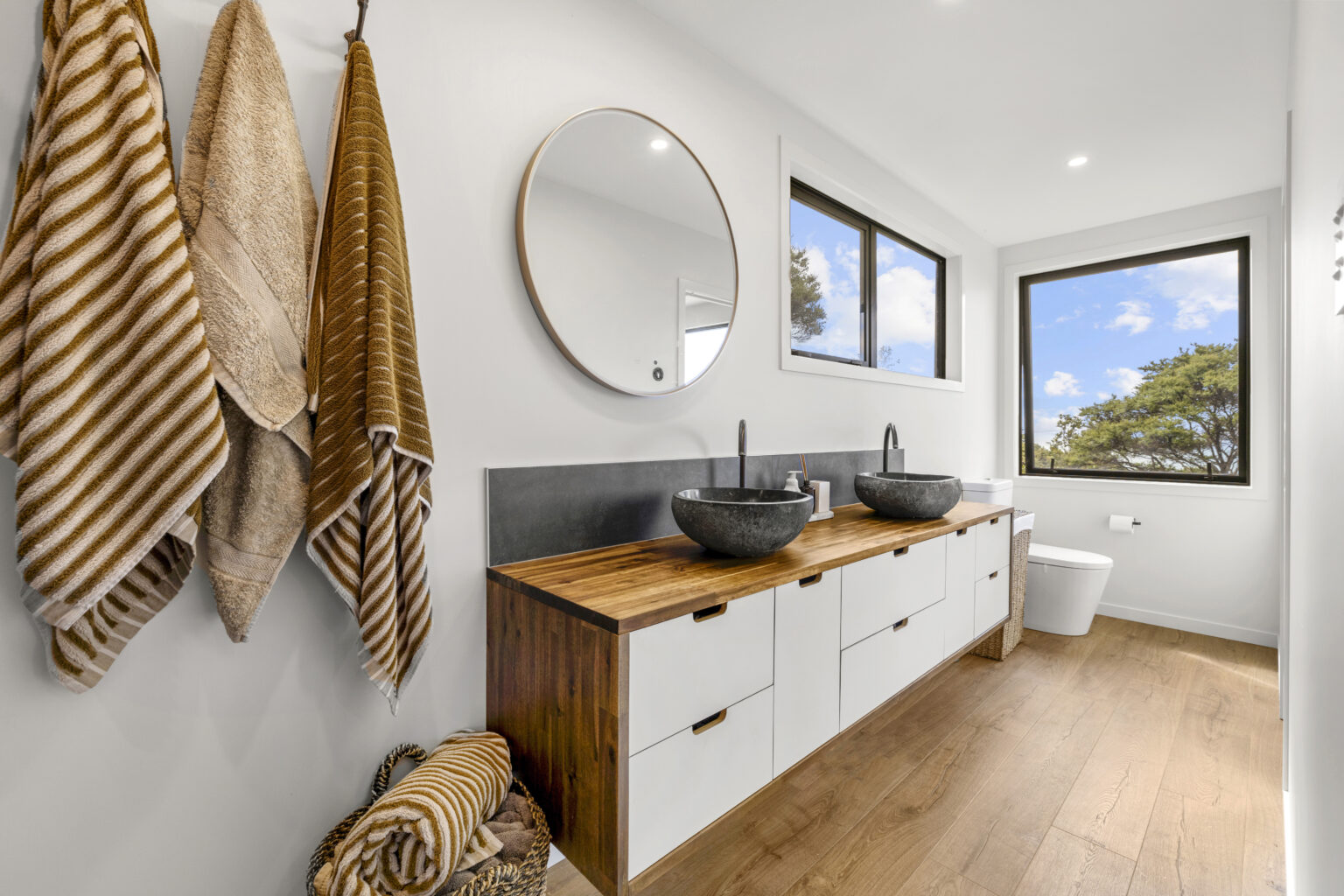
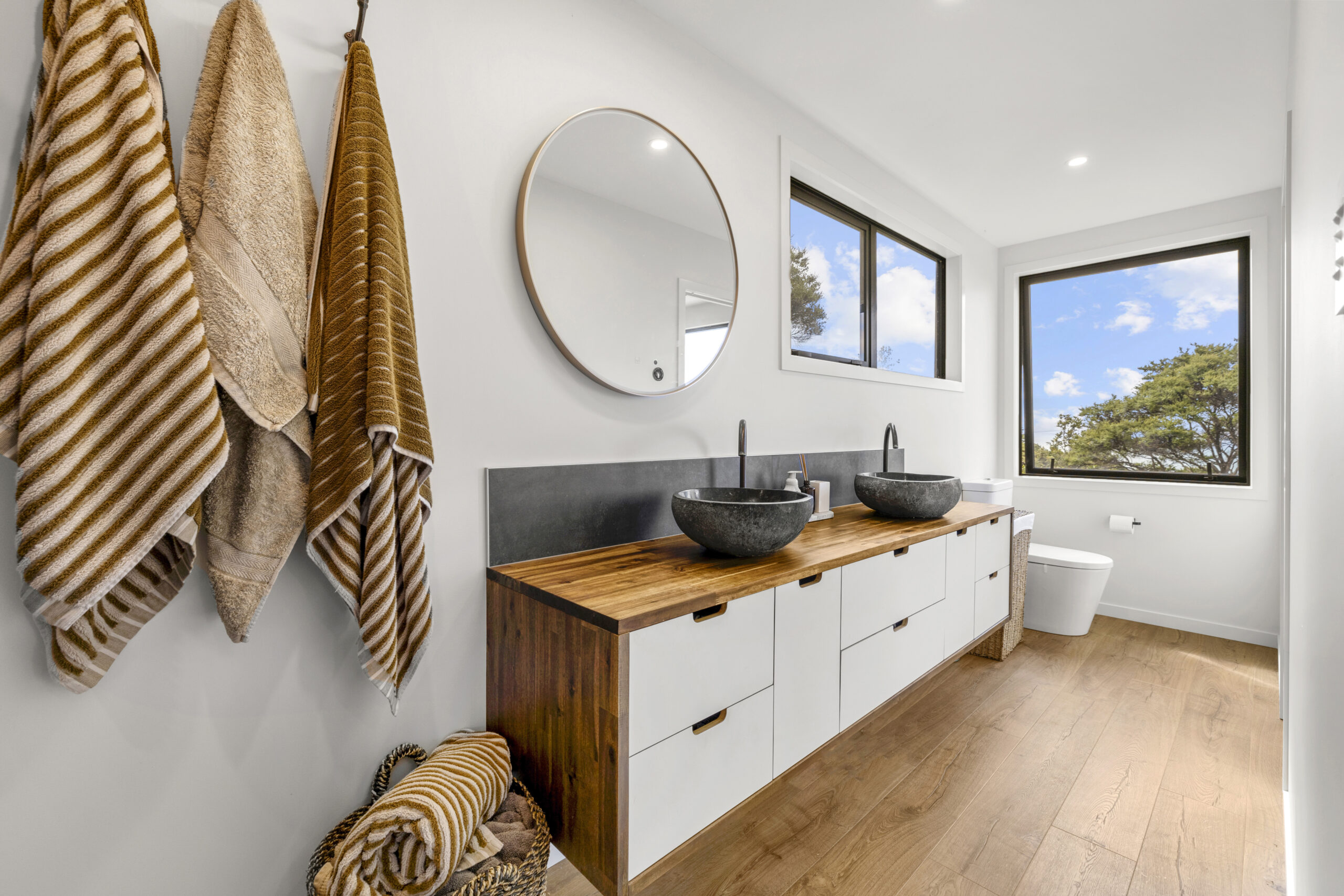
Most Hamilton homeowners underestimate what goes into a bathroom renovation. They picture new tiles and a fresh vanity, maybe a new shower. But a proper bathroom remodel touches almost every trade in the building industry: plumbing, electrical, waterproofing, tiling, cabinetry, and more.
Knowing what’s involved before you start helps you plan better, budget accurately, and choose the right people for the job.
Here’s a clear breakdown of what’s included in a full bathroom renovation in Hamilton, from first consultation through to final handover.
Thinking about starting your renovation? Get a free bathroom renovation quote from The Reno Guys →
What Does a Full Bathroom Renovation Include?
A full bathroom remodel in Hamilton typically covers:
- Design and planning: layout changes, fixture selection, and consent considerations
- Demolition: stripping the existing bathroom back to framing
- Waterproofing: a critical step that protects your home long-term
- Plumbing: moving or updating pipes, drainage, and water supply
- Electrical: lighting, ventilation, and heated towel rails
- Tiling: floor and wall tiles, grouting, and finishing
- Cabinetry and vanity installation: vanity units, mirrors, and storage
- Fixture fit-out: toilet, shower, bath, taps, and hardware
- Final finishing: painting, sealants, and clean
Each of these is a separate trade. A good renovation company coordinates all of them so you don’t have to manage multiple contractors yourself.
Step-by-Step: How a Hamilton Bathroom Renovation Works
Step 1: Consultation and Design
Everything starts with a site visit. Your renovation company will measure the space, discuss your goals and style preferences, and put together a design and quote.
For renovations involving layout changes (moving the shower, relocating the toilet) a plan drawn up by a designer or draughtsperson may be required. This is also the stage where council consent is assessed. Most straightforward bathroom renovations don’t need consent, but if structural changes or significant plumbing relocation is involved, your builder should confirm this upfront.
Step 2: Fixture and Material Selection
Before any work starts, you’ll need to select your tiles, vanity, tapware, shower, toilet, and accessories. Your renovation company will either guide you through this or work alongside a designer.
Getting selections locked in early prevents delays. If tiles are on back-order or a vanity needs to be sourced from overseas, that timeline flows directly into when your renovation can begin.
Step 3: Demolition
Once planning is confirmed and materials are ordered, the physical work begins with demolition. The existing bathroom is stripped back completely: tiles, vanity, toilet, shower or bath, old waterproofing, and in most cases the plasterboard lining, until you’re back to the framing.
Demolition often uncovers surprises: rotten timber from years of moisture, old plumbing that needs replacing, or waterproofing that was never done properly. It gives both the builder and the client peace of mind that the framing around the wet area is of good condition and gives the opportunity to fix any problems. A good builder documents these and discusses options with you before proceeding.
Step 4: Plumbing Pipe out and electrical pre-wire
With walls open, the plumber and electrician complete their rough-in work. This includes repositioning drain locations and water supply pipes if the layout is changing, running new electrical cables for lighting and heated towel rails, and installing ventilation ducting. Both trades need to be signed off before walls are closed up.
Step 5: Waterproofing
Waterproofing is one of the most important parts of a bathroom renovation. It’s also one of the most commonly done poorly in older Hamilton homes.
Under New Zealand building code, wet areas (showers, around baths, and floor areas) must be properly waterproofed. Your builder applies a tanking membrane to walls and floors in all wet zones and allows it to cure fully before tiling begins. A properly waterproofed bathroom should last decades. A poorly waterproofed one can cause rot, mould, and significant structural damage within a few years.
Step 6: Lining and Tiling
Once waterproofing has cured, walls are lined (usually with 9mm Villa Board where tiles are being installed) and tiling begins. This is often the most time-consuming part of the renovation.
Your tiler sets out the tile layout to minimise cuts and ensure symmetry, applies adhesive and lays tiles to walls and floors, then grouting and sealing complete the work. Complexity varies with tile size, layout, and design. Large-format tiles, feature walls, and complex patterns all add time.
Step 7: Cabinetry, Vanity, and Fixture Fit-Out
With tiling complete, it’s time for fit-out. This includes installing the vanity unit and basin, hanging mirrors and wall-mounted storage, setting the toilet, installing the shower screen or bath, and fitting tapware, towel rails, and accessories. Your electrician also returns at this stage to connect lighting and heated towel rails.
Step 8: Painting and Final Finishing
The final stage covers painting ceilings and any unpainted wall areas, applying sealants around fixtures, and completing trim work. A thorough clean is carried out, fixtures are tested, and the renovation is inspected before handover.
How Much Does a Bathroom Renovation Cost in Hamilton?
Bathroom renovation costs vary depending on size, specification, and how much of the layout is changing. As a general guide:
| Renovation Type | Estimated Cost Range |
| Basic refresh (cosmetic update, same layout) | $10,000 – $18,000 |
| Mid-range full renovation | $18,000 – $35,000 |
| High-end renovation or ensuite | $35,000 – $60,000+ |
These ranges include materials and labour. What moves the price up most: layout changes (which mean more plumbing and electrical work), high-spec tiles and fixtures, and the size of the space.
The most accurate way to budget is a detailed quote from a renovation specialist who has seen the space.
How Long Does a Bathroom Renovation Take?
A standard full bathroom renovation in Hamilton typically takes 3 to 5 weeks from demolition to handover, depending on scope and whether unexpected issues arise during demolition. The most common cause of delays is material lead times. Ordering tiles, vanities, and fixtures early in the process keeps the project on track.
Why Choose a Bathroom Renovation Specialist
Not all builders are equally suited to bathroom renovations. Bathrooms are one of the most trade-intensive rooms in a home, requiring precise coordination between plumbing, electrical, waterproofing, and tiling, often in a very tight space.
A renovation specialist brings several advantages:
Established trade relationships. Your plumber, electrician, and tiler know how to work together, which reduces delays and minimises problems when issues come up.
Renovation-specific experience. Understanding what to look for during demolition, how to handle moisture damage, and how to meet current building code in older Hamilton homes takes years of specialist work. Generalist builders who do renovations on the side often lack this depth.
Single point of contact. One person coordinates every trade and keeps the timeline moving. You’re not chasing three different contractors for updates.
At The Reno Guys, Dan personally manages every bathroom renovation project from consultation through to handover. The team has been completing bathroom renovations across Hamilton and the wider Waikato for over a decade, working alongside a trusted group of tradespeople who’ve completed hundreds of jobs together.
As one recent client noted: “Shane produced very high quality work and was easy to have around the house. Pricing was very reasonable for such high quality work.”
Frequently Asked Questions About Bathroom Renovations in Hamilton
Do I need council consent for a bathroom renovation in Hamilton? Most standard bathroom renovations don’t require building consent, provided you’re not making structural changes or significantly relocating plumbing. Your builder should confirm this at the consultation stage. Any restricted building work (such as moving drainage) must be carried out by a Licensed Building Practitioner (LBP).
Can I stay in my home during a bathroom renovation? Yes, in most cases. If you have a second bathroom, you’ll be able to use it throughout. If it’s your only bathroom, your builder can discuss how to minimise disruption and whether any temporary arrangements make sense.
How do I choose tiles for a bathroom renovation? Tile selection depends on the look you want, the size of the space, and your budget. Larger format tiles can make a small bathroom feel more open. Textured tiles are safer on floors. Your designer or local tile supplier can walk you through options that work for your specific space.
What’s the difference between a bathroom renovation and a bathroom remodel? In New Zealand, the terms are used interchangeably. Both refer to updating or replacing the existing bathroom. A full renovation typically means stripping back to framing and starting fresh. A cosmetic refresh might replace fixtures or retile without structural changes.
How do I get a quote for a bathroom renovation in Hamilton? Contact The Reno Guys for a no-obligation consultation. We’ll visit your home, assess the space, and provide a detailed quote based on your brief and budget.
Ready to Plan Your Bathroom Renovation?
If you’re planning bathroom renovations in Hamilton, The Reno Guys are renovation specialists, not generalist builders. We handle bathroom renovations, kitchen renovations, and house extensions across Hamilton and the wider Waikato.
Call Dan on 021 855 444 or use our contact form to get started.